

Clicky

Battery Use Android Tips That Actually Work

Android battery issues often come from a few apps and settings that use a lot of power. A few simple changes can add hours to your battery life.

Understanding Battery Use On Android

Watching your phone’s battery use is like shining a light in dark corners—you see what’s using power. In my tests, changing just a couple of settings helped someone double their standby time in a day.

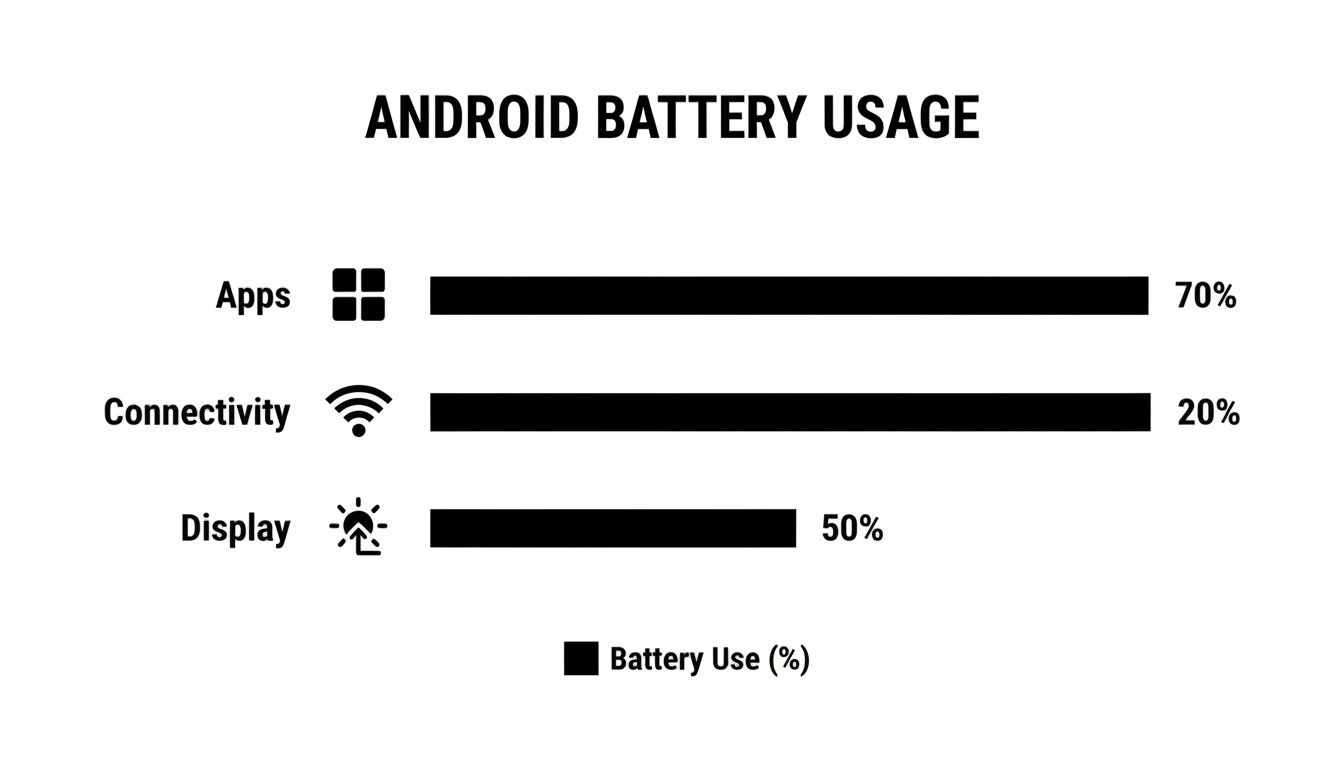
Here’s where most of the power goes:

  • Apps can use 15–30% of your battery when they run or sync in the background.
  • Wi-Fi and mobile data can drain power when they keep searching for a signal.
  • The screen can eat up 25–40% of your battery, especially with high brightness or a fast refresh rate.

Cutting screen brightness by 20% or checking for new data less often can boost video play time by up to 30%. One friend turned on adaptive brightness and got two extra hours of use in the evening.

Reducing background sync from every 15 minutes to every hour gained nearly 50% more standby time for one commuter.

Fix one big battery drain at a time—that way you see results without feeling overwhelmed.

Real World Scenarios

People who travel a lot and tech fans say routine battery checks cut down on “will it last?” worries.

You might also like our guide on factors that influence phone battery life to see what else affects your Android battery.

Stack these tweaks and you could see:

  • 20–30% longer video sessions after dimming the screen and slowing background sync
  • Up to twice the standby time by turning off unused radios and checking less often
  • An extra 10–15% saved with adaptive brightness in mixed light

Results vary by device and habits. Start with the biggest power user in your battery stats and watch your Android last longer.

Checking And Interpreting Battery Usage

Before you change settings, look at real data. Without that, you’re guessing which apps use the most power.

Go to Settings > Battery > Battery Usage to see which apps and services are draining your phone.
Screenshot from https://developer.android.com/images/ui/battery_usage_report.png

This chart shows power use over the last 24 hours and highlights your top power users.

Reading Battery Graphs

The timeline view shows your battery level against time. It helps you match app use to battery drops.

Key parts of the chart:

  • Foreground Usage: Activities when the screen is on (like videos or games)
  • Background Drain: Apps running while the screen is off
  • Idle Behavior: How well your phone sleeps when you’re not using it

I once saw my messaging app lose 15% overnight. Turning off its background activity fixed it.

Analyzing Idle Behavior

Your phone should rest when the screen is off. If it still uses power, an app is keeping it awake.

One user found a sync service using 5% battery every hour while idle. Turning off that service cut the idle drain by half.

Interpreting Usage Patterns

Your daily routine sets real battery goals. Focus on your biggest power users to make those goals happen.

  • Lower screen brightness a bit
  • Turn off Wi-Fi or Bluetooth when not needed
  • Use Airplane Mode in areas with poor signal

In one test, these steps cut total use by nearly 30%. Small changes add up fast.

For a look at phone battery trends over time, see insights on smartphone battery trends from SQ Magazine.

Learn how to check your battery’s overall health in our guide on battery health.

Best Practices For Routine Checks

Quick battery checks every few days help you spot new power hogs.

Keep this list handy:

  • Restart your phone or clear app caches weekly
  • Compare this week’s battery use with last week’s
  • Watch for spikes after installing new apps and adjust permissions

Regular checks catch battery issues before they ruin your day.

Android Battery Life Trends

Here’s a quick look at recent battery improvements. Use it to track your own phone’s progress.

Year Runtime Increase (%) Efficiency Gain (%)
2023 0% 0%
2024 12% 9%
2025 23% 19%

These numbers help you see how much better phones get each year.

Identifying And Fixing Common Battery Drains

Not all apps use power the same way. Some keep the phone awake, while others sync data too often.

Turning off location for apps you rarely use freed over an hour of battery for one commuter. Another friend lowered his screen refresh rate and cut his use by 10%.

A fitness app kept the camera on all night. Turning off its background camera access stopped a 12% overnight drain.
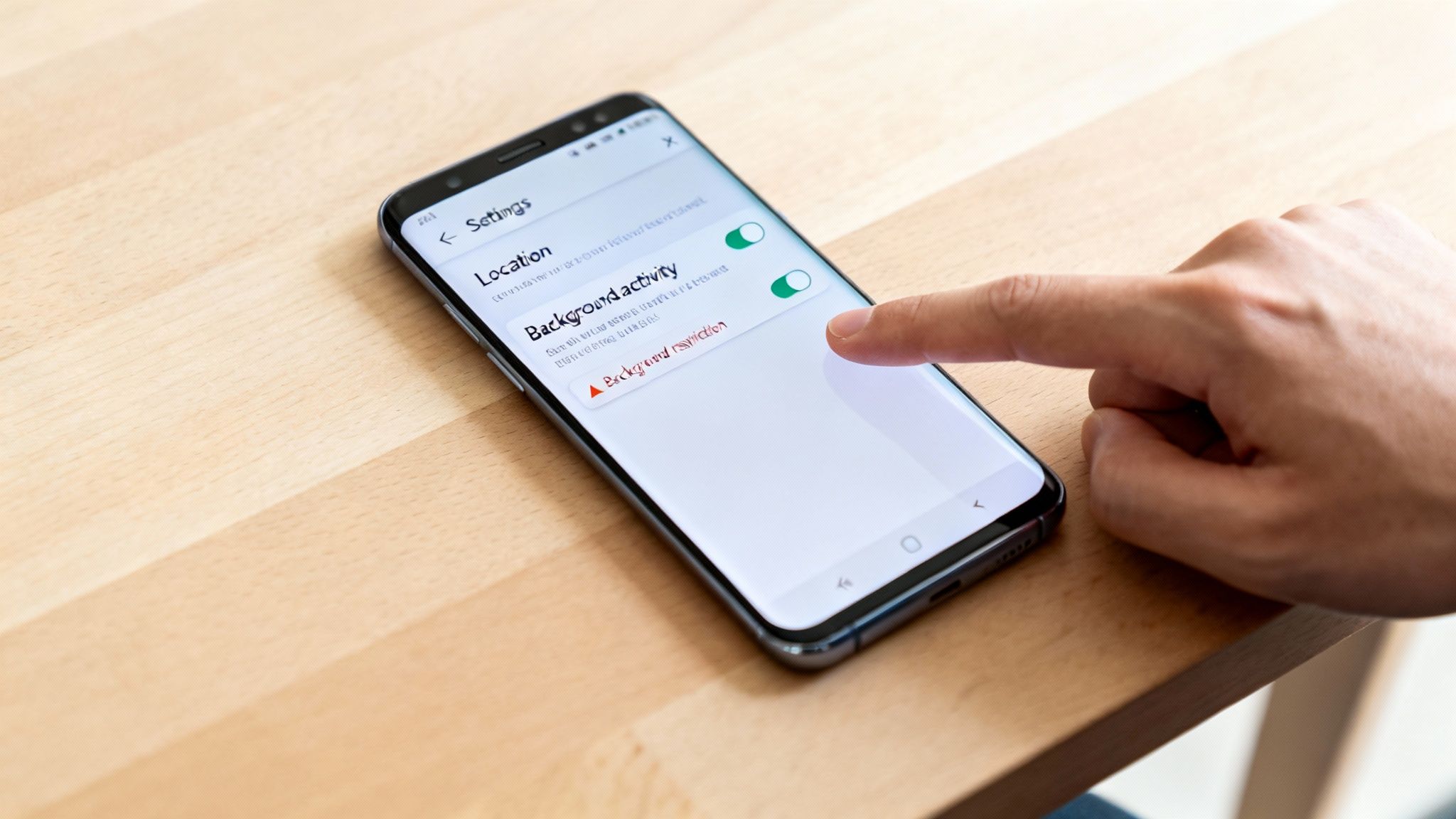
Common Battery Drains

Rogue Apps Holding Wake Locks

Some apps stop your phone from going to sleep. In Settings > Battery > Battery Usage, look for apps using a lot of power in the background. If one stands out, force-stop or uninstall it.

Android now warns you when apps keep your phone awake too long.

Curbing Aggressive Sync Operations

Apps that check for new data too often can drain 10% or more per hour. Here’s a better balance:

  • Set sync intervals to 30 or 60 minutes in app settings
  • Turn off push sync for less important accounts
  • Do big uploads or downloads only when on Wi-Fi

You stay up to date without waking your phone constantly.

Handling Power Hungry Sensors

GPS and Bluetooth are handy, but they use power in the background. One user turned off GPS in a navigation app and cut idle drain by 50%. Another saves 5–8% overnight by turning off Bluetooth.

Try this:

  • Turn off GPS when you’re not using maps
  • Use Bluetooth only for things like speakers or headphones
  • Let apps use location only while you’re using them

When To Update Or Uninstall Misbehaving Apps

Old apps can have bugs that drain power. Look for updates in the Play Store that say “performance improvements” or “bug fixes.” If that doesn’t help, delete the app or switch to a lighter one.

High memory use can cause extra work for your phone. In your battery report, watch for apps using lots of memory and take action.

App Name Version Background Drain Action Required
ChatPlus 2.3.1 15% per hour Update to 2.4.0 or uninstall
MapExplorer 4.1.0 8% per hour Lower GPS use or disable BG
MusicStream 5.2.2 10% per hour Stop it when not playing music

Fix these drains now to get real extra battery time. Next, let’s look at power settings and safe charging.

Configuring Power And Background Settings

Android gives you simple controls to get more from your battery. Below we cover power saver, screen tweaks, background data limits, and habits that make a difference for battery use android.

Adjust Battery Saver And Brightness

The biggest power users are the processor and screen. Turning on Battery Saver slows your phone and stops some tasks. Adaptive Brightness learns your lighting and lowers the screen when you don’t need full brightness.

  • Go to Settings > Battery > Battery Saver
  • Turn on Battery Saver at 50% or lower
  • In Display settings, enable Adaptive Brightness
  • Try different brightness levels in bright and dim light

One user saw 25% more runtime on a long flight by using these settings.

Throttle Background Data Per App

Apps that sync in the background all the time can drain your battery. Turning off background data for apps you rarely open can save hours.

  • Open Settings > Apps
  • Pick an app and tap Mobile data & Wi-Fi
  • Turn off Background data
  • Do this for low-priority apps

“Turning off background sync on my second email account added two hours of standby,” says a traveler.

Manage Always On Display And Power Profiles

Always On Display is useful for quick checks but uses extra power. Turning it off saved another user 10% battery in a day. Android’s power profiles let you switch between Performance, Balanced, and Ultra-Battery modes.

  • In Lock screen settings, turn off Always On Display
  • Swipe down and choose a Power Profile
  • Use Ultra-Battery when you need your phone to last

Profiles change how fast your phone runs, how often it checks for data, and how bright the screen is.

Must-Have Settings Checklist

Setting Recommended Option Benefit
Battery Saver On at 50% or lower Up to 30% extra runtime
Adaptive Brightness Enabled Screen adjusts itself
Background Data Restricted selectively Cuts idle drain by 10–15%
Always On Display Off Saves 5–10% per hour
Power Profile Balanced/Ultra-Battery Adjusts CPU and data checks

Try each tweak in your daily life to see what works best.

Quick Tips And Best Practices

  • Check sync settings whenever you add a new app
  • Use Wi-Fi when you have a good signal
  • Do big uploads or downloads on Wi-Fi only

“I recharge half as often after adopting these habits,” says a delivery driver.

Try these tips and watch your phone last longer between charges.

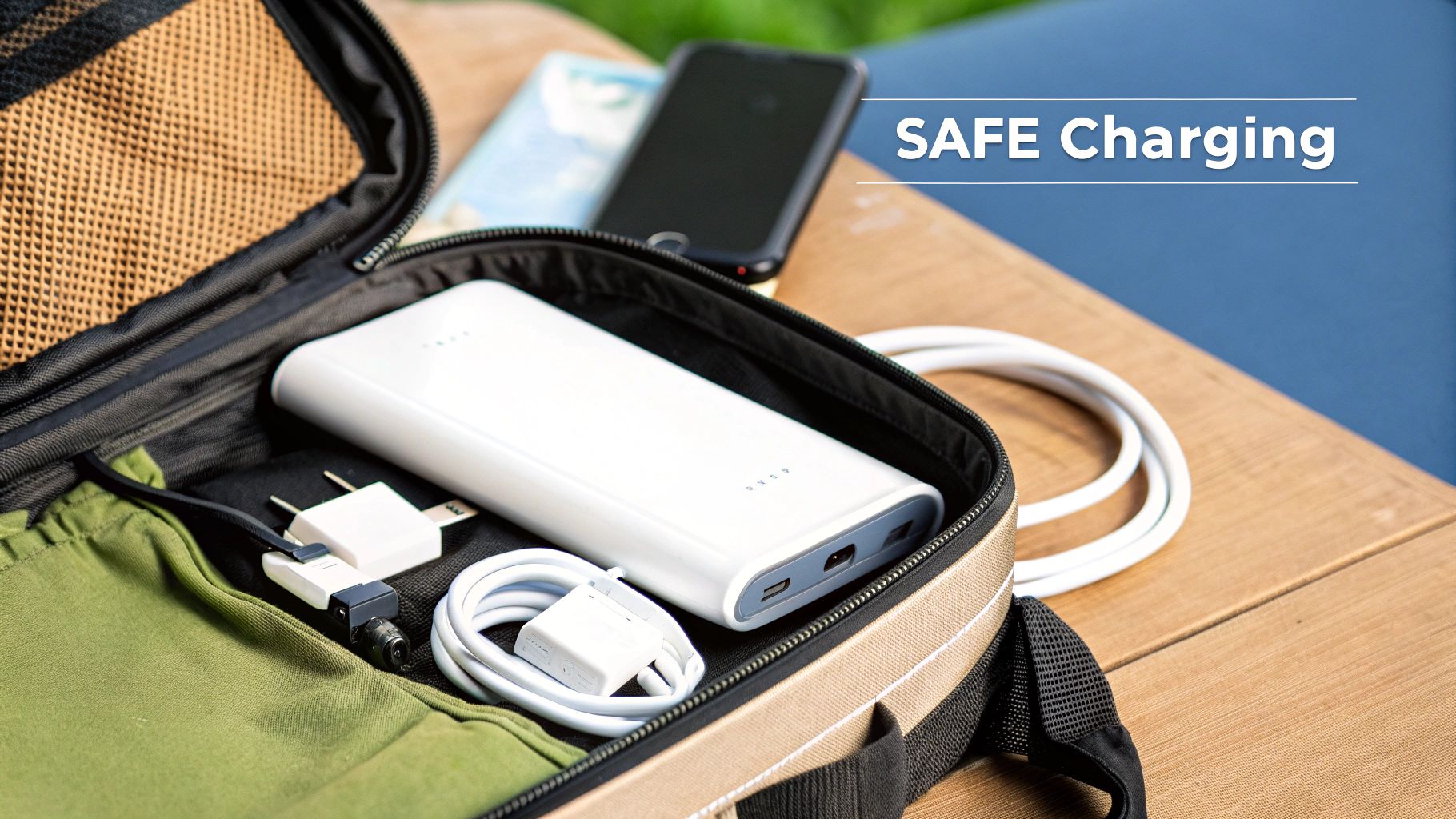
Safe Charging Practices And Hardware Integration

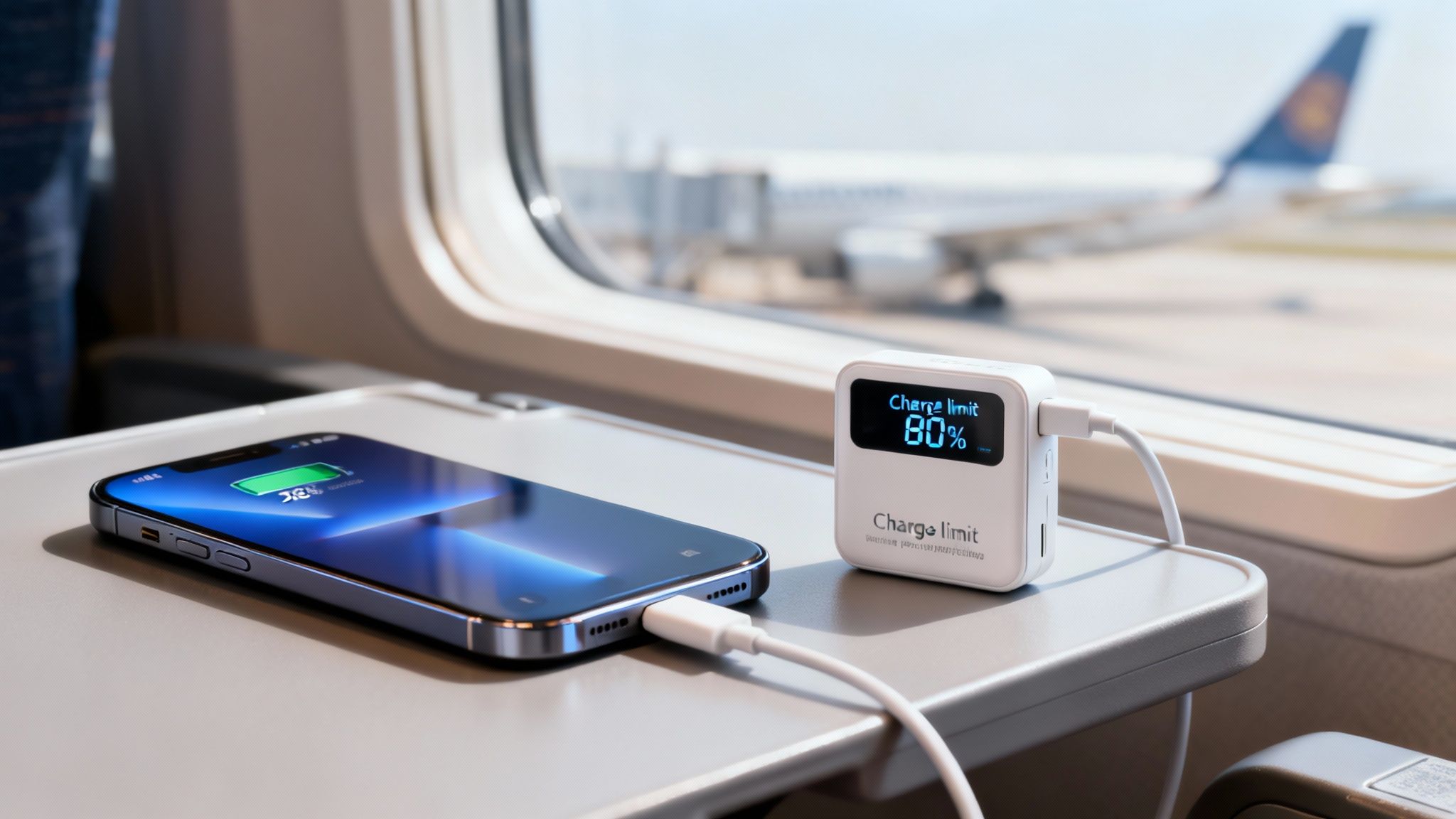
Notice how your battery seems weaker after a year? It often comes from how you charge. Charging to 100% and letting it drop too low wears out the battery faster. Small changes can help a lot.

One friend stops charging at 80% each morning. Another sets their phone to top off at 70% before the alarm goes off.

  • Part charging eases stress and slows capacity loss
  • Slow charging overnight keeps temperatures low
  • Staying between 20% and 80% can extend battery life by up to 30%

Understanding Partial Charging Benefits

Batteries don’t like being full or empty. Charging only to 80% and not letting it drop below 20% keeps cells in a healthy range.

If you have a short flight, a 30% quick charge at a moderate speed can avoid the rush to find an outlet. Over time, your battery stays more reliable and lasts longer.

Check global battery capacity trends here: Next-Gen Battery Capacity by Country in 2025

Integrating Chargie For Smart Charging

Meet Chargie, a smart USB-C adapter and app that automates your charge limits. Plug it in, pair with the Android app, and set your lower and upper limits (like 20% to 80%).

  • Plug Chargie into your charger
  • Open the Chargie app on your Android device
  • Pair via Bluetooth and set your charge range
  • Turn on the scheduler for overnight charging
Screenshot from https://chargie.app/img/chargie-overview.png

The dashboard shows charge cycles, battery levels, and schedule. You get clear info, no guessing.

Comparing Charging Approaches

Method Charge Range Key Benefit
Standard Charger 0–100% Convenient but stresses battery
Manual Partial 20–80% Slows down battery wear
Chargie Hardware 20–80% Auto cutoff and timed charging

Chargie combines easy partial charging with automation to stop overcharging.

For more tips on charging, see how to charge your lithium-ion battery for a longer life.

Smart charging routines and tools like Chargie can extend your battery’s life and cut e-waste.

Additional Safe Charging Tips

Heat speeds up battery wear. Don’t charge on hot surfaces or under pillows.

  • Use your phone’s original cable for a steady charge
  • Unplug when your set limit is reached to avoid trickle charge
  • Use a charger with an overheat cut-off if possible
  • Combine partial charging with Android power-saving modes

Real World Charging Scenarios

Rachel, an eco blogger, went from replacing her phone battery every year to every four years by capping at 80%.

Raj, a taxi driver, used Battery Saver and Chargie to only charge twice in five days instead of every day.

“With Chargie’s scheduler, I wake up to 85%, not 100%, and my Pixel stays healthy.” —Long-haul driver

Little changes like these add up. Follow safe charging practices, try Chargie, and your Android will outlast the rest.

  • Keep your charger in a place with good airflow—no pillows or clothing covering it

Implement these safe charging steps and see how your battery use improves.

Frequently Asked Questions

Running out of battery too fast? Here are simple answers from real users.

How Do I Stop Apps Running In The Background From Draining My Battery?

Go to Settings > Battery > Battery Usage, pick the app, then:

  • Turn off Background Data
  • Restrict Background Activity
  • Force-stop or uninstall if it still drains power

Last week, my weather app used 15% overnight. Turning off its background data gave me 15% more charge by morning.

Does Adaptive Battery Really Improve Runtime?

Yes. Over time, Adaptive Battery learns which apps you barely use and slows them down. You won’t notice, but your battery will.

“Adaptive Battery cut my background drain by 25%,” says a commuter.

What’s The Best Way To Charge My Android Device For Long-Term Health?

Keeping your battery between 20% and 80% makes a big difference. Avoid full 100% charges and rapid chargers when you can.

  • Use a slow or smart charger
  • Set reminders to unplug at your target limit

This keeps your battery healthy over months and years.

Are Third-Party Battery Management Tools Worth It?

Android’s built-in features cover most needs. But if you want precise charge scheduling or your phone has no limit, reliable hardware-and-app combos can help. Always check reviews first.

Cutting background activity often recovers 20–30% of standby time.

Charging Best Practices

  • Use reminders or adapters to stop charging at 80%
  • Top up before you wake up with timers or apps
  • Keep your phone cool—high heat speeds up battery wear

For hands-off control, try a tool like Chargie. It automates charging so you focus on your day, not your phone.

A hardware charger can boost cycle life and cut replacement costs by up to 85%.

Follow these tips to keep your Android powered longer.


Ready to take control of your battery on Android? Protect your battery health and schedule smart charges with Chargie.
How to Charge Your Lithium Ion Battery for a Longer Life

The secret to a longer-lasting battery isn't a complicated trick. It’s all about a few simple, smart habits. The main idea behind lithium ion battery charging best practices is to stay away from the extremes—don't let your battery drain to 0% or leave it on the charger at 100% for hours. These small changes can make a big difference for your phone, laptop, and even your electric car.

The Simple Truth About Charging Your Batteries

Let's get straight to what works. Think of your battery like a sponge. It soaks up energy best when it's not totally dry or completely full. Pushing it to its limits, either full or empty, puts a lot of stress on its insides, causing it to wear out much faster.

This guide is built on one core idea: small changes to your charging routine lead to big long-term benefits. You don't need to be a battery expert to make your devices last two or even three times longer. It just comes down to a few key ideas that prevent unnecessary strain.

Why Small Habits Matter So Much

Every time you charge and use your battery, it wears down a tiny bit. That might not sound like a big deal, but over hundreds of charges, it adds up. The result? A battery that just doesn't hold a charge like it used to. The goal of smart charging is to make each of those charges as gentle as possible.

This isn't just for one type of device; it applies to everything powered by lithium-ion batteries, including:

  • Smartphones and Tablets: Your daily devices that will last longer if you don't leave them plugged in at 100% all night.
  • Laptops: These are often left plugged in, which can be surprisingly harmful if not managed the right way.
  • Electric Vehicles (EVs): With EVs, a healthier battery means a longer driving range and a better resale value for your car.

Speaking of EVs, their charging needs are a bit different, but the basic ideas are the same. For a more detailed look, you might want to check out a comprehensive electric vehicle charging guide for more specific tips.

If you remember only one thing, make it this: the best strategy is to keep your battery in a comfortable "middle ground." This simple change in thinking is the key to everything we're about to cover.

To give you a quick summary, the table below lays out the golden rules. We’ll explain each of these ideas in more detail throughout the guide, telling you not just what to do, but why it works so well.

Quick Guide to Smart Battery Charging

Best Practice The Simple Rule Why It Matters for Battery Life
Manage Charge Levels Avoid 0% and 100%; aim for a 20-80% range. Reduces the stress that wears out the battery.
Control Temperature Charge at room temperature; avoid hot or cold. Prevents damage from extreme heat or cold.
Choose Charging Speed Use slower chargers when you have time. Creates less heat and puts less strain on the battery.

Think of these three rules as the foundation for a healthy battery. Stick to them, and you're already doing a great job of making your device last longer.

Why Staying Between 20 and 80 Percent Works Wonders

If you only take one piece of advice from all the lithium ion battery charging best practices out there, let it be this one. The 20% to 80% rule is the most powerful habit you can adopt to give your battery a longer, healthier life. It might not sound like much, but the impact is huge.

Think of your phone's battery like a rubber band. You can stretch it all the way out (charging to 100%) and let it go completely slack (draining to 0%), but doing that over and over again will wear it out. The rubber loses its spring and eventually snaps. A battery isn't so different; constantly pushing it to its limits creates internal stress that permanently weakens its ability to hold a charge.

Keeping your battery in that comfy 20% to 80% range is like using the rubber band gently. You’re avoiding the points of maximum tension, which keeps wear and tear to a minimum. This simple trick keeps the battery's insides stable and happy.

The Science Behind the Sweet Spot

So what’s really going on inside your battery when it hits 100% or 0%? In simple terms, a lithium-ion battery works by moving tiny charged particles between two layers. When you charge to 100%, you’re cramming as many particles as you can into one of those layers. This creates high pressure and stress—like overpacking a suitcase until the seams are groaning.

On the flip side, when the battery drains to 0%, the other layer becomes completely empty. This can make the internal parts unstable and cause them to break down over time.

By staying in the 20-80% zone, you're keeping the battery in a state of low stress. It’s like a relaxed state, where none of the parts are being pushed to their breaking point. This one habit is your best defense against early battery aging.

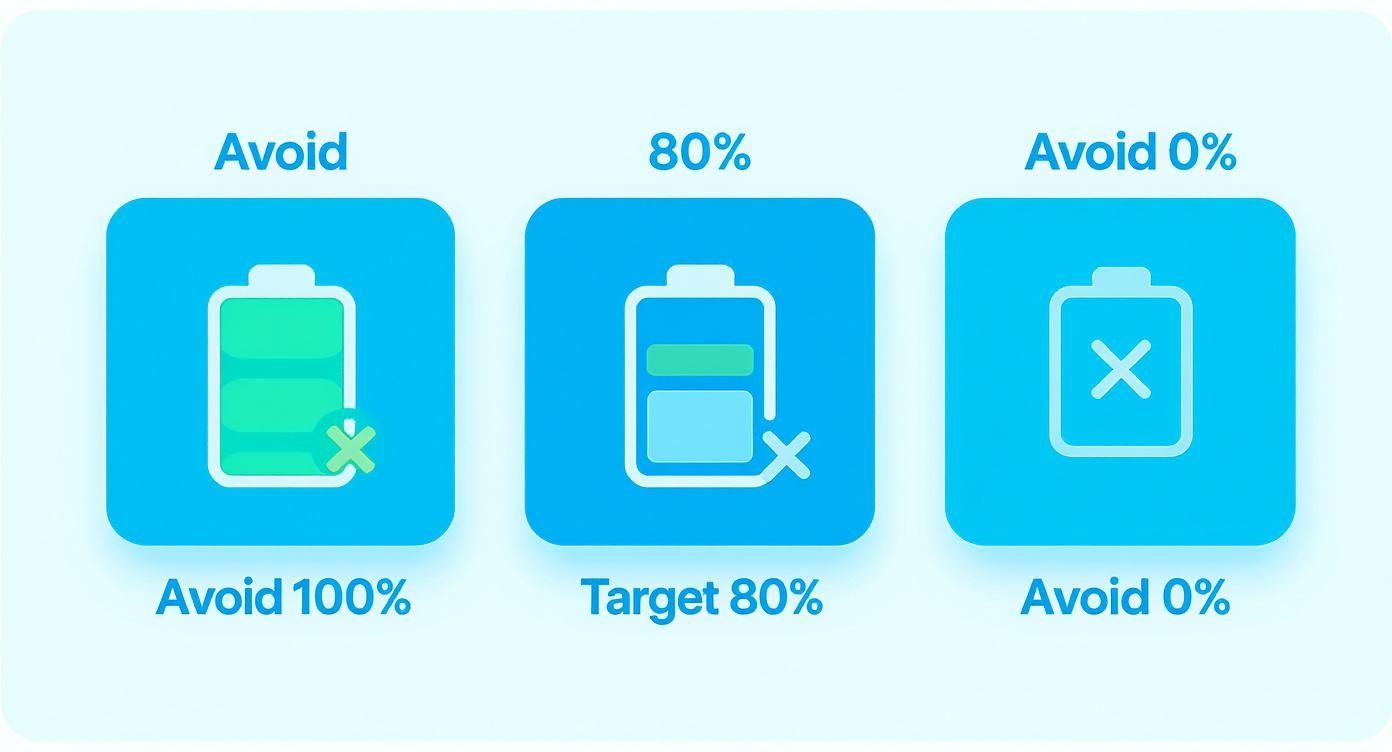
This infographic breaks the whole idea down into three simple rules for better charging.

Infographic about lithium ion battery charging best practices

As you can see, the goal is pretty clear: stay away from the extremes and aim for a comfortable limit of 80% to keep that battery healthy.

Real-World Data Confirms the Benefits

This isn't just a theory; it's backed by a lot of research and real-world data. One of the biggest discoveries in battery science is how much a partial charge—specifically between 20% and 80%—can extend its life. For example, a study of over 10,000 electric cars showed that batteries consistently charged in this range kept up to 95% of their original capacity after 1,000 charges.

What about the batteries that were regularly charged from 0% to 100%? They held on to only 70% of their capacity over the same period. You can dig deeper into these findings on battery performance to see just how much smart charging habits matter.

What this means for you is that by simply avoiding the top and bottom 20% of your battery's capacity, you can keep it running strong for way longer. You get more useful life out of every single device you own.

Practical Steps to Follow the 20-80 Rule

Putting this rule into practice doesn't have to be a chore. Modern devices and smart tools are making it easier than ever to build healthy charging habits.

Here are a few ways to get started:

  • Set Charging Limits: Many smartphones (like iPhones under "Battery Health & Charging") and electric cars let you set a charge limit, usually at 80%. Just turn on that setting and let your device do the work.
  • Use a Smart Charger: A device like Chargie is like a guard for your power outlet. You can set it to cut off the power once your battery hits a certain level, like 80%, which makes overnight charging totally safe for your battery.
  • Practice "Snack Charging": Instead of one long 0-to-100% charge, give your battery short bursts of charging throughout the day. Plugging in for 15-30 minutes here and there is much gentler on its internal parts.

Ultimately, the 20-80 rule is about changing your mindset from "full is best" to "stable is best." Sure, you might give up a tiny bit of runtime on any given day, but the long-term payoff is a battery that performs reliably for years, not just months.

Keeping Your Battery at a Comfortable Temperature

A thermometer showing a moderate, safe temperature for charging a lithium-ion battery.

Just like the 20-80% rule, getting the temperature right is a huge part of healthy charging. Batteries are a lot like us—they have a comfort zone where they work best. Push them too far outside that zone, whether it's too hot or too cold, and you're asking for trouble. It's one of the fastest ways to cause permanent damage.

Think of it as the "Goldilocks" rule for batteries. You want the temperature to be just right. For most lithium-ion batteries, that sweet spot is between 20°C and 25°C (68°F and 77°F), which is basically room temperature. Charging outside this range puts the battery's insides under serious stress, which is a sure way to speed up wear and tear.

The Dangers of Charging in the Cold

You might be surprised to learn that charging a battery when it's freezing cold is incredibly harmful. Once the temperature drops below freezing (0°C or 32°F), the chemical reactions inside the battery slow way down. If you try to force a charge in these conditions, something bad can happen inside the battery.

Think about trying to spread butter that's straight out of the fridge. It doesn't spread smoothly; it just clumps up and tears the bread. That's a good way to picture what happens. Instead of the tiny power particles moving smoothly into place, they can build up on the surface as metal. This damage can't be undone.

This buildup permanently cuts the battery's total capacity and can even create tiny internal problems, which is a major safety risk. Seriously, just a few times of charging in freezing temperatures can take a noticeable chunk out of your battery's lifespan.

The consequences are real. Data from manufacturers shows that charging below 0°C can cut a battery’s lifespan by up to 30% after only 200 charges.

Why Heat Is a Battery's Worst Enemy

While cold is bad news, heat is the enemy your battery faces far more often—and it's just as destructive. High temperatures act like a fast-forward button, speeding up all the bad chemical reactions that cause a battery to wear out over time. Every single degree above that ideal range puts extra stress on the battery, causing it to age much faster than it should.

This is exactly why you should never leave your phone charging on the dashboard of a hot car or stuff it under your pillow at night. In those spots, the heat from charging gets trapped, causing the battery's temperature to shoot up.

The link between heat and battery health is clear. Studies have shown that for every 10°C jump above the recommended range, a battery's life can be cut by as much as 25%.

Simple Tips for Temperature Management

The good news is that keeping your battery cool doesn't require any fancy equipment. It's mostly about being aware of your device's surroundings, especially while it's charging.

  • Avoid Direct Sunlight: This one’s easy. Don't charge your phone, laptop, or EV in direct sun. The combined heat from the sun and the charging process is a recipe for disaster.
  • Ensure Good Airflow: Give your devices some breathing room. Charging under blankets, pillows, or inside a cramped bag traps heat and is a very bad idea.
  • Remove Thick Cases: Some of those super-tough cases are great for drop protection but terrible for letting heat escape. If you notice your phone getting warm while charging, take the case off for a bit.
  • Let It Cool Down: If your device is hot to the touch after a heavy gaming session or using navigation, give it a few minutes to cool off before plugging it in.

Beyond just getting the most out of your battery, managing temperature is a critical safety issue. For more on battery and fire-safety considerations, especially for your home, there are some great resources available. Following these simple steps will go a long way in protecting your devices and keeping their batteries healthy for years.

Why Slow and Steady Charging Is Often Better

In a world obsessed with speed, it’s no surprise that fast charging feels like the best choice. It’s quick, it’s convenient, and it gets your phone ready to go in minutes. But when it comes to the long-term health of your battery, one of the best things you can do is go slow whenever you have the time.

Think of it like filling a glass of water. You could blast it with a firehose or fill it gently from the tap. The firehose gets the job done faster, but it's a messy, aggressive process. Slow and steady charging is like using the tap—it’s a much calmer, more controlled method that puts way less stress on your battery’s insides.

High-speed charging works by pushing a huge amount of electricity into the battery as quickly as possible. While that's great for a quick top-up, it creates a ton of heat. And as we already know, heat is the number one enemy of a healthy battery, as it speeds up the chemical reactions that cause it to wear out for good.

The Hidden Cost of High-Speed Charging

The damage from fast charging isn't just about heat. Shoving all that power in at high speeds also puts physical strain on the battery's internal parts. Over time, this repeated stress causes tiny amounts of damage that add up, slowly chipping away at the battery's ability to hold a charge.

It’s like slamming a door versus closing it gently. Both get the door closed, but one method is going to wear out the hinges and frame a whole lot faster. The exact same principle applies to your battery. Every fast-charging session adds a little more wear and tear than a slow one would.

Fast charging is a great tool for emergencies or when you're in a hurry. But it shouldn't be your go-to for everyday charging, especially overnight. A slow, gentle charge is always the healthier choice for your battery.

This is exactly why using a standard, lower-power charger is one of the smartest moves you can make, particularly when you’re plugging in for a long time, like before bed.

Finding the Right Charging Balance

You don’t have to give up fast charging forever. The trick is to be smart about when you use it. Modern phones are built to handle rapid charging, but using it less often will absolutely pay off in the long run.

Here are a few simple ways to work slower charging into your routine:

  • Use the Right Tool for the Job: When charging overnight, grab a basic 5-watt charger instead of that powerful 25-watt or 45-watt one. Your phone will be full by morning, and its battery will thank you for the gentle treatment.
  • Charge from a Laptop: A standard USB port on a computer pushes out power much more slowly than a wall charger. This makes it a perfect option for a stress-free charge.
  • Turn Off Fast Charging Features: Some phones let you turn off fast charging right in the settings. This tells the device to only accept a slower, healthier charge.

The proof is in the data. For instance, charging methods have gotten smarter. A 2023 study of electric car fleets in Europe found that vehicles using smarter charging retained 90% of their battery capacity after 800 charges. In contrast, those using basic chargers were down to just 60%.

If you want to dig deeper, you can discover more insights about maximizing battery life to see how this can lead to a 50% longer useful life for the battery. It’s a powerful example of how a controlled, steady charge preserves battery health over time.

By choosing a slower charge when you can, you’re not just following a tip—you’re actively protecting your investment and making sure your device’s battery stays reliable for years.

Common Battery Charging Myths Debunked

Bad advice about charging is everywhere, and a lot of it is out of date. To really understand lithium-ion battery charging best practices, we need to forget the old habits that might be hurting our devices. Let's clear the air and set the record straight.

This isn't about complicated science. It's about separating fact from fiction. So many of us are still following rules that made sense for old-school batteries, but they just don't apply to the modern lithium-ion ones in our phones, laptops, and EVs.

Myth 1: You Must Drain Your Battery to 0% Before Recharging

This is probably the most common myth out there, and for today's batteries, it's completely wrong. This advice comes from older battery types that had a "memory effect"—if you didn't fully drain them, they'd start to "forget" how much power they could hold.

Lithium-ion batteries have no memory effect. At all. In fact, running them down to 0% is one of the worst things you can do. As we've covered, a deep drain like that puts a ton of stress on the battery's insides, speeding up its decline. It's much, much healthier to give it shorter, more frequent top-ups.

Myth 2: Leaving Your Phone Plugged in Overnight Will Overcharge It

This one is a little tricky because it's part true, but mostly misleading. Modern phones are smart enough to stop pulling power once they hit 100%. Your device has built-in protection to prevent it from "overcharging" in a way that would cause it to fail immediately. So, is it going to explode? No.

But that doesn't mean leaving it plugged in all night is a good idea. Once the battery reaches 100%, the charging stops, but the phone immediately starts using a tiny bit of power. When it drops to 99%, the charger kicks back in to top it off. This creates a constant cycle of tiny "trickle charges" all night long.

This constant state of being topped up to 100% keeps the battery at a high-stress level for hours. While not an immediate danger, this long-term stress is a major reason why batteries lose their ability to hold a full charge.

This is exactly why so many people are looking for a better way. If you're curious, you can learn more about whether you should charge your phone overnight and what's really happening. A far better approach is using a tool like Chargie that physically cuts the power at a healthier limit, like 80%.

Myth 3: You Should Always Fully Charge a New Device Before Using It

Here's another myth from the past, a leftover from old battery technology. New lithium-ion batteries come from the factory with a partial charge, usually around 40-50%, because that's the best and most stable state for storage. You can pull your new gadget out of the box and start using it right away without causing any harm.

There's absolutely no need for a long first charge. Just use it like you normally would and start applying healthy charging habits from day one—like keeping it in that sweet spot between 20% and 80%. That’s how you set your new battery up for a long and healthy life.

Putting It All Into Practice

A person setting a charging limit on their smartphone to 80%

Knowing the ideas behind smart charging is one thing. Actually using these rules in your busy life is what really counts. This is where knowledge becomes action. Let's break down the main points of lithium-ion battery charging best practices into some simple checklists you can use right away.

These tips are designed to fit into your daily routine without much fuss. Whether it's a quick setting change on your phone or getting a device ready for storage, these practical steps will get you started with healthier charging habits immediately.

Your Smartphone and Laptop

These are the devices we use the most, and they often suffer from bad habits like being left on the charger all night. A few small changes can make a world of difference for their long-term battery health.

  • Turn on the 80% Limit: Most modern phones and laptops have a built-in feature to stop charging at 80%. Look in your battery settings and turn it on. It’s the single easiest and most powerful thing you can do.
  • Use a Slow Charger Overnight: If you have to charge while you sleep, grab a low-power charger. An old 5W phone charger or a standard computer USB port works great. This creates way less heat and puts less strain on the battery.
  • Avoid Charging in Bed: Seriously, don't charge your device under pillows or blankets. This is a recipe for trapping heat—a battery's worst enemy—and will shorten its life.
  • Practice "Snack Charging": Instead of letting your battery get very low, give it short 15-20 minute top-ups throughout the day when it's convenient. This keeps the battery in its happy place, between 20-80%.

For anyone who wants to just set it and forget it, a dedicated battery charge limiter is a total game-changer, making overnight charging completely worry-free.

Your Electric Vehicle (EV)

An EV's battery is its most expensive and important part. Taking care of it is key to protecting its value and your driving range. The rules are the same as for your phone, just on a much bigger scale.

The real secret to a long-lasting EV battery is consistency. A daily charging routine that respects the battery’s limits will pay you back for years, helping your car hold onto as much of its original range as possible.

Just follow these simple rules for your daily EV charging:

  1. Set a Daily Charge Limit: For your regular commute and driving around town, limit your vehicle's charge to 80%. Only push it to 100% when you know you're heading out on a long road trip and will need all the range.
  2. Stick to Level 2 Charging: Whenever you can, use a Level 2 (240V) charger at home or work. Save the DC fast chargers for road trips, as their high power and heat can cause extra wear if used too often.
  3. Charge in a Sheltered Spot: If possible, plug in your EV inside a garage or under a carport. This helps protect the battery from extreme summer heat or bitter winter cold while it's charging.

Long-Term Device Storage

Putting an old tablet, phone, or laptop away for a few months? Don't just toss it in a drawer and forget about it. How you store it really matters.

  • Aim for a 50% Charge: Never store a device with a totally full or completely dead battery. A charge level around 50% is the sweet spot—it’s the most stable state and puts the least amount of stress on the battery over time.
  • Keep It Cool: Find a cool, dry place for storage. You'll want to avoid attics or basements where the temperature can change a lot.
  • Check In Every So Often: Every few months, it's a good idea to turn the device on and top the battery back up to around 50% just to keep it healthy.

Still Got Questions About Charging?

Even with all the best practices laid out, a few common questions always seem to pop up. Let's tackle some of the most frequent ones to clear up any confusion.

"Is It Bad to Top Up My Phone Multiple Times a Day?"

Not at all. In fact, it’s one of the best things you can do for your battery.

These little "snack charges" are much healthier than letting your phone drain way down and then charging it all the way back to 100%. Think of it as keeping your battery in its happy place—that sweet spot between 20% and 80%. Short, frequent top-ups reduce the stress inside the battery.

So go ahead, plug it in for 15 minutes here and there. Your battery will thank you for it with a much longer, healthier life.

"Should I Turn My Phone Off While It Charges?"

It’s not absolutely necessary, but it definitely helps. Why? One word: heat.

Using your phone for anything demanding while it's plugged in—like gaming or streaming video—creates a ton of extra heat. And as we've covered, heat is the number one enemy of battery health.

By turning it off (or even just switching to airplane mode), you let the battery charge in a cool, stress-free state. It's a simple move that prevents a lot of unnecessary heat damage over time.

"What Exactly Is a Charge Cycle, and How Do These Tips Help?"

A charge cycle is just a way of measuring battery wear. It represents one full drain from 100% down to 0% and back up again. This doesn't have to happen all at once—charging from 50% to 100% twice counts as one complete cycle.

Every lithium-ion battery can only handle a certain number of cycles before it starts to get much weaker. Your average smartphone battery is good for about 300-500 full cycles before its ability to hold a charge drops off a cliff.

This is where all our tips come into play. By practicing partial charging and avoiding those extreme highs and lows, you’re basically reducing the "wear and tear" of each charge. You use up your limited cycles much, much more slowly.

The end result? You get way more useful charges out of your battery before it hits that limit, stretching its lifespan and keeping your phone feeling new for longer.


Take complete control of your battery health with Chargie. Our smart charging device makes it effortless to implement these best practices, automatically stopping your charge at a healthy 80% to prevent overnight damage and extend your device's life by up to 4x. Learn more and protect your battery at https://chargie.org.

How to Use a Power Bank: A Simple Guide to Charging on the Go

Using a power bank is easy: you charge it up, and then it charges your stuff. First, you'll need to charge the power bank itself using a wall charger. Once it's full, just connect your phone or tablet with the right cable, press the power button, and you're all set.

Getting Started With Your Power Bank

So, you've just unboxed your new portable charger. Before you can start using it on a long travel day or during a busy schedule, there are a couple of quick things to do to get it ready. It’s less about a complicated setup and more about just preparing it to work its best from the very beginning.

It’s no surprise that power banks have become a daily essential. The global market was valued at an incredible USD 12.2 billion in 2024, which just goes to show how much we all depend on our gadgets. You can dig into the numbers and trends over on imarcgroup.com. This massive growth highlights that knowing your way around a power bank isn't just for tech experts anymore—it's a practical life skill.

This quick visual guide breaks down the whole process into three simple stages.

As you can see, it really is as easy as charging it up, checking the power level, and plugging in your device.

First Charge and Basic Functions

The very first thing you should do is give your new power bank a full, uninterrupted charge. Use the cable it came with and plug it into a wall charger—not a laptop, as that can be too slow. Let it sit until all the indicator lights are solid, showing it's at 100%. This first charge is super important because it helps the battery's sensor work correctly, ensuring you get accurate power level readings later on.

Once it's charged, you'll notice it's a pretty simple device. A single press of the power button usually does one of two things: it either wakes the power bank up to start charging a connected device, or it lights up the LED indicators to show you how much juice is left. It’s a handy feature for that quick check before you walk out the door.

Understanding Your Power Bank's Lights and Symbols

Those little blinking lights and symbols on your power bank aren't just for show—they're telling you exactly what's going on. Learning to read them is key to knowing when to recharge the bank or how much power you have left for your devices. Here's a quick guide to what the most common indicators mean.

Indicator What It Means Action to Take
Solid LED Lights The power bank is fully charged or is showing its current battery level. If all lights are solid, it's ready to use. If some are off, that's how much power is left.
Blinking LED Lights The power bank is either charging itself or actively charging another device. Let it continue charging until the lights turn solid. If it's charging a device, it's working as expected.
One Blinking Light The battery level is very low (usually below 10%). Time to find an outlet and recharge the power bank as soon as possible.
No Lights On The power bank is off or completely out of battery. Press the power button once. If nothing happens, it needs to be charged.

This table should help you quickly figure out what your power bank is trying to tell you, so you're never caught off guard with a dead battery when you need it most.

The Right Way to Charge Everything

A person connecting a charging cable to a power bank.

How you charge your gear actually matters more than you might think. It’s not just about getting the power flowing—it's about doing it safely and efficiently to protect both your devices and the power bank itself.

Think of it this way: using a tiny, low-power wall plug to charge a massive power bank is like trying to fill a swimming pool with a garden hose. Sure, it’ll get the job done… eventually. But it's painfully slow. You should always try to use a powerful wall charger to fill up your power bank for the best results.

Smart Charging Habits for Your Devices

When you're plugging in your devices, be strategic. Most power banks have multiple charging ports, and they are definitely not all the same. Some are built for power-hungry gadgets like tablets, while others are better for your phone or earbuds.

  • High-Power Ports: Look for the ports marked with a higher number (like 2.4A) or wattage. These are your friends for bigger devices like an iPad or even a Nintendo Switch, making sure they charge at a good speed.
  • Standard Ports: The lower-power ports (often 1A) are perfect for your smartphone or wireless headphones. Using these for smaller devices prevents putting unnecessary stress on their batteries.

This simple habit of matching the port to the device is a huge part of learning how to use a power bank effectively and will seriously extend the life of your electronics.

Here’s a pro tip: I'd avoid "pass-through charging" whenever possible. That's when you charge a device from the power bank while the power bank itself is plugged in and charging. It creates a lot of extra heat, which is the number one enemy of battery life for both your gear and the bank itself.

This is more relevant than ever. Our reliance on mobile tech is exploding—in the Asia Pacific region, smartphone ownership was 76% in 2022 and is on track to hit 94% by 2030. That trend is fueling the massive need for reliable portable power. You can see more data on this at fortunebusinessinsights.com.

Some of the newer, more powerful power banks can even handle bigger electronics now. If you're curious about juicing up your larger gadgets on the go, check out our guide on how many watts you need to charge a laptop. By building these smart habits, you’ll make sure your gear is always ready when you need it.

Keeping Your Power Bank Healthy for Longer

A person holding a healthy, well-maintained power bank.

Think of a good power bank as a long-term travel companion, not something you have to throw out and replace every year. And just like the battery in your phone or laptop, a little bit of care goes a surprisingly long way. Picking up a few simple habits can dramatically improve its health and how well it performs over its lifetime.

The biggest rule is one you already know: keep it away from extreme temperatures. Leaving your power bank to bake in a hot car is a sure way to damage its internal battery. The same thing happens if you leave it out in the freezing cold—that can permanently reduce its total power capacity.

Smart Storage and Usage Habits

One of the most common mistakes I see is people letting a power bank sit completely dead for months. If you only pull it out for the occasional trip, please don't just toss it in a drawer at 0%. The batteries inside really don't like being left completely empty for long periods.

When you're putting it away for a while, the best charge level for storage is right around 50%. This keeps the battery stable and healthy. It's also a good idea to use it at least once every three months—give it a partial charge or use it to top off your phone. This keeps everything in good working order.

There's an old myth that you need to drain batteries completely before recharging. While that was true for old-fashioned batteries, it's actually harmful for the modern batteries in your power bank. Regularly running it down to 0% puts a lot of stress on the battery and will absolutely shorten its lifespan.

For day-to-day use, try to keep the charge level somewhere between 20% and 80%. This is the best range for a long life. Of course, charging it to 100% right before a long flight is perfectly fine when you need every drop of power. Just try not to make it a daily habit. If you're looking to automate this, a hardware battery charge limiter can be a game-changer for managing these levels without you having to think about it.

Key Maintenance Do's and Don'ts

Protect your investment with a few simple practices. It’s the difference between a power bank that lasts for years and one that dies an early death.

  • Do: Store it in a cool, dry place. A desk drawer is great; a car's glove compartment is not.
  • Don't: Let it die completely. Once you see that last light blinking, it's time to find an outlet.
  • Do: Use it occasionally. Even a quick top-up for your phone once a month is better than letting it gather dust.
  • Don't: Overcharge it constantly. There's no need to leave it plugged in all day; just unplug it when it’s full to reduce battery stress.

Safe Charging Habits Everyone Should Know

A person safely packing a power bank into their carry-on luggage for a flight.

Knowing how to charge your power bank is one thing, but using it safely is just as important. A few smart habits can protect your expensive gear from damage and, just as importantly, make sure you don't run into any trouble with airport security.

Believe it or not, the most common reason for charging problems usually isn't the power bank itself—it's the cable. Using a frayed, cheap, or damaged cable can lead to unstable power and damage your phone. If you ever notice a cable getting unusually hot or see it's worn out, stop using it immediately. It's just not worth the risk.

Spotting a Dangerous Power Bank

Just as you'd check your cables, you need to keep an eye on the physical condition of your power bank. The batteries inside are generally very safe, but they can become a real hazard if they get damaged.

There are a couple of red flags you should never, ever ignore:

  • Physical Swelling: If the case of your power bank looks puffy, bloated, or like it's bulging, that’s a clear sign of internal battery failure. This is a serious safety risk.
  • Excessive Heat: It’s totally normal for a power bank to get a little warm when it's working hard. However, if it ever gets too hot to comfortably hold, unplug it right away. Let it cool down somewhere safe, away from anything that can catch fire.

A swollen or overheating power bank is a ticking time bomb. Don't try to use it, charge it, or even keep it in your house. The best thing to do is take it to a designated battery recycling center for safe disposal.

While these problems are rare, especially with well-known brands, they show why it pays to be careful. Of course, people have lots of questions about other common practices, and you can learn more from our guide on whether you should charge your phone overnight.

Flying with Your Power Bank

You can absolutely travel by air with a power bank, but you have to follow the rules from the TSA and individual airlines. These aren't just for show—they exist because the batteries can pose a fire risk in the cargo area of a plane.

The main rule is simple: all power banks must be in your carry-on luggage. They are strictly forbidden in checked bags. Period. Most airlines also set a power limit, usually around 100Wh (watt-hours), which covers nearly every power bank you'd buy for personal use. Just toss it in your backpack or purse, and you'll get through security just fine.

Solving Common Power Bank Problems

Even the best power banks can have problems. Before you give up and assume it's dead, a few quick troubleshooting tricks can usually get things working again. More often than not, the issue is something small you can fix yourself in seconds.

One of the most common issues is a power bank that just won't charge your device. The first place I always look? The cable. It's the most likely culprit. Grab a different cable—one you know for sure is working—and see if that does the trick. You’d be surprised how often a bad cable is the real problem.

If a new cable doesn't solve it, the next stop is the charging ports themselves.

Quick Fixes for Unresponsive Chargers

Over time, the charging ports on both your power bank and your phone can get packed with pocket lint, dust, and other debris. This buildup prevents a good connection, and a quick, gentle clean can make all the difference.

  • Inspect the Ports: Take a close look inside the USB ports on the power bank and your phone.
  • Clean with Care: Grab a wooden or plastic toothpick and gently scrape out any debris you see. Never use anything metal, like a paperclip, as it can easily damage the port.
  • A Blast of Air: A can of compressed air is also a great, safe option for clearing out any stubborn dust.

Once you’ve cleaned the ports, try connecting everything again. This simple fix is often all it takes to solve charging problems.

Still nothing? You can try a simple reset. Just take the charging cable, plug one end into the power bank's output port, and loop the other end back into its input port. Hold it for about 10 seconds. This can sometimes reboot the internal system and clear up minor glitches.

Another classic issue is painfully slow charging. If your phone is taking forever to gain any juice, check that you’re plugged into a high-power port on the power bank. These are usually marked with 2.1A or higher. Also, make sure you're using a high-quality cable that’s actually designed for faster charging speeds.

Got Power Bank Questions? We've Got Answers.

We get asked all the time about the dos and don'ts of using power banks, so I want to clear up a few things I see popping up constantly.

One of the biggest questions is whether it's okay to use your phone while it's hooked up to a portable charger. The short answer? Yes, it’s generally fine. Your phone and the power bank are smart enough to manage the power flow and have safety features built in.

That said, using your phone while it charges—especially for something intense like gaming—creates extra heat. And if there's one thing that absolutely destroys a battery's long-term health, it's heat. So, whenever you can, just let it charge in peace.

How Many Charges Will I Actually Get?

This is the classic question. People often think if they have a 10,000mAh power bank and a 5,000mAh phone battery, they'll get two full charges. It just doesn't work that way.

The truth is, you lose a good chunk of energy when power moves from the bank to your phone, mostly as heat. It's never 100% efficient. A realistic rule of thumb is to expect only about 60-70% of the advertised capacity to actually make it into your device.

For example, a 10,000mAh power bank doesn't really give you 10,000mAh of charging power. You're looking at more like 6,500mAh of usable power. If your phone has a 3,250mAh battery, you'll get roughly two full charges out of it. Simple as that.

Knowing this little bit of math helps you pick the right size for your needs. A 10,000mAh unit is usually the sweet spot for daily top-ups. But if you're heading out for a long weekend or need to charge multiple gadgets, grabbing a 20,000mAh model is a much safer bet.


If you're serious about making your batteries last and finally ending the worry about overnight charging, you need to check out Chargie. It’s a smart hardware-and-app system that gives you total control over how you charge, preventing the damage that kills your battery's lifespan. Protect your phone and cut down on e-waste by visiting us at https://chargie.org.

Chargie is a smart charging device designed to extend the lifespan of your phone's battery by limiting overnight charging.

Company

Lighty Electronics SRL
42 Viorelelor st
305500 Lugoj, Romania

EU VAT: RO35245011

© 2019-2026 Lighty Electronics SRL. All Rights Reserved.

Add to cart