

What is trickle charging: A simple guide to battery care
Ever left a car or motorcycle sitting in the garage all winter, only to find the battery completely dead in the spring? It’s a frustratingly common experience.
This happens because all batteries naturally lose a bit of their charge over time, even when they aren't being used. It’s a slow, silent energy drain called self-discharge.
Trickle charging was invented as the classic, straightforward solution to this problem.
What Is Trickle Charging in Simple Terms
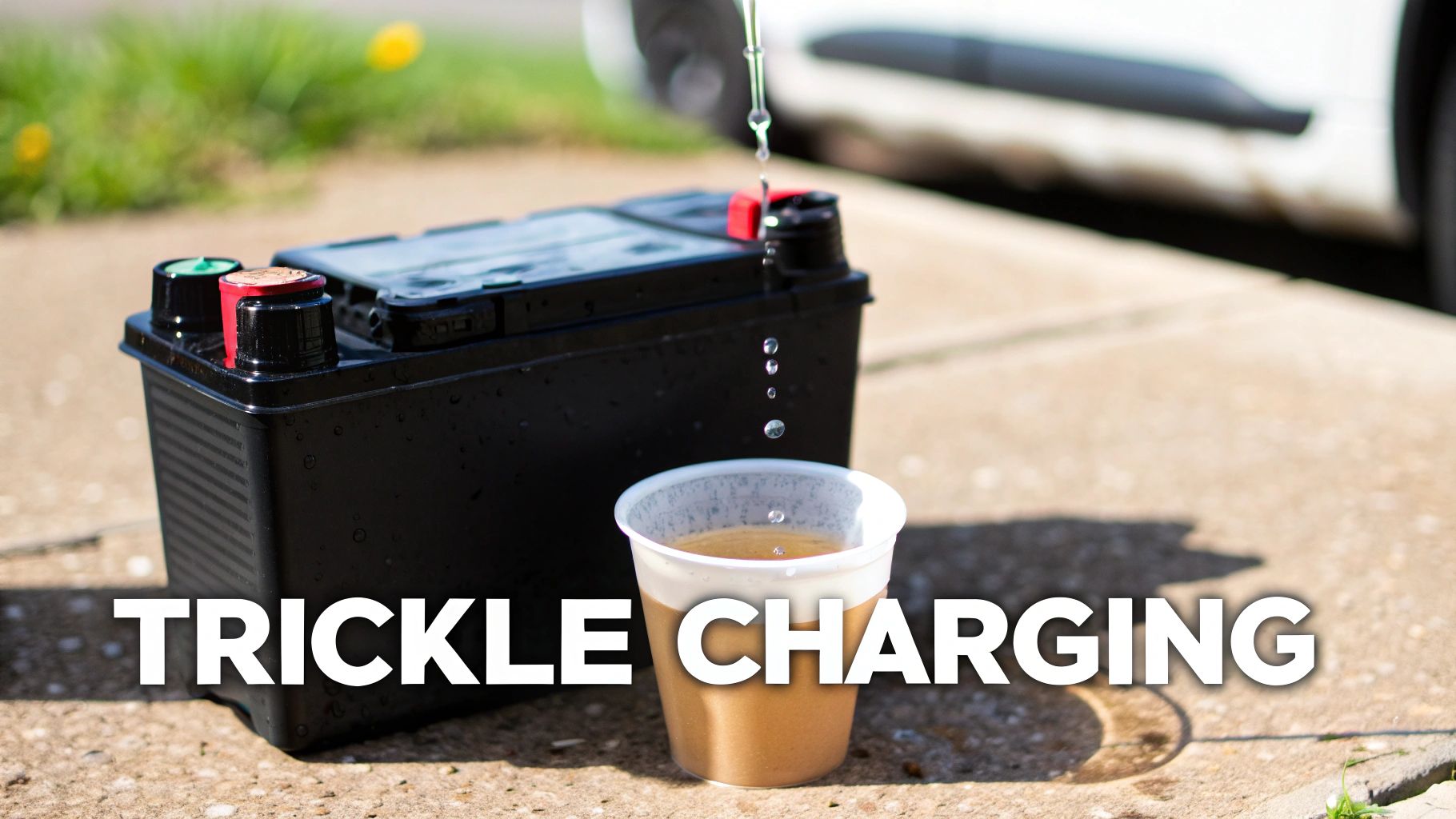
At its heart, trickle charging is a way to slowly feed a battery a very small amount of power. The goal isn’t to charge it up fast; it's to replace the energy the battery loses just from sitting there.
Think of it like this: your battery is a bucket with a tiny, slow leak. If you leave it alone, it will eventually empty. A trickle charger is like a faucet dripping water into the bucket at the exact same rate it's leaking out. The water level never drops, and the bucket stays full and ready to go.
Here's a quick breakdown to make the idea crystal clear.
Trickle Charging at a Glance
| Characteristic | Simple Explanation |
|---|---|
| Purpose | To keep a battery full, not to charge it up quickly. |
| Power Level | Very low and steady, just enough to stop it from draining. |
| Best Use Case | For vehicles stored for a long time (cars, boats, motorcycles). |
| Common Analogy | A dripping faucet keeping a leaky bucket full. |
This simple "set it and forget it" approach was perfect for its original purpose.
The Original Purpose of Trickle Charging
This technology became popular as a way to take care of lead-acid batteries—the kind you find in most vehicles. These workhorse batteries can get seriously damaged if their charge level drops too low for too long. A trickle charger prevents this by keeping the battery topped off, helping it last longer and making sure your car starts right up when you need it.
The whole method is built on a few key ideas:
- Low and Slow: It uses a tiny amount of power, way less than a normal or fast charger.
- Constant Power: A basic trickle charger sends a continuous stream of power, no matter if the battery is full or not.
- Maintenance First: Its main job is to keep a battery at 100%, not to bring a dead battery back to life.
It's an old-school idea made for a specific job: keeping stored batteries healthy. But as battery technology has changed, so have our charging needs. While this method is perfect for some situations, it's not the right fit for modern gadgets like your smartphone.
That’s why battery care has advanced, leading to smarter tools like a dedicated battery charge limiter that offers much better control for the devices we use every day.
A simple trickle charger doesn't know when to stop. It just keeps supplying power, which was fine for older, tougher batteries but can be risky for newer, more sensitive ones. Understanding this difference is key to taking care of your batteries.
How Trickle Charging Works on Different Batteries
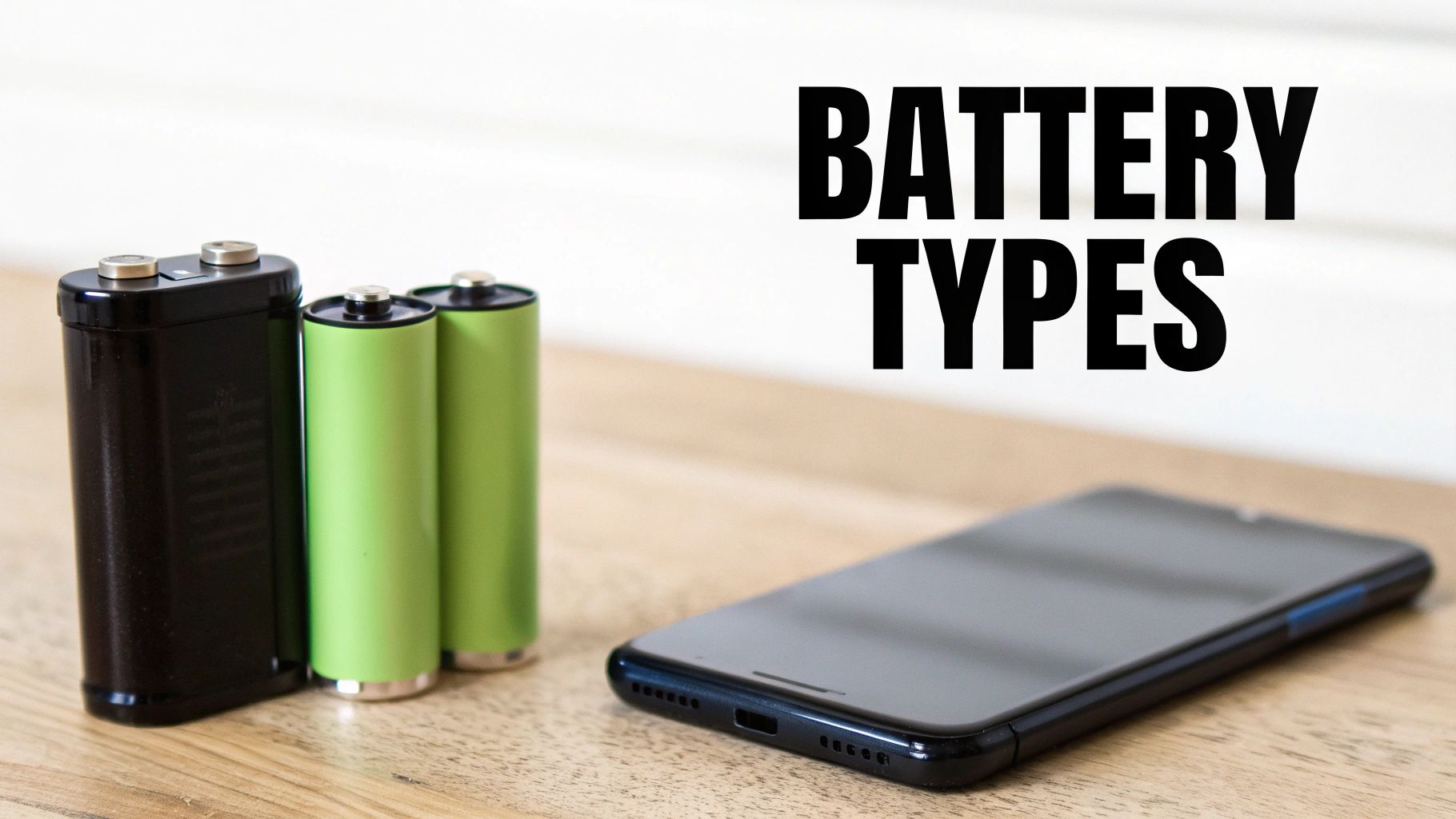
The idea of trickle charging isn’t a one-size-fits-all solution. Different batteries have completely different parts and needs, a bit like how a dog and a hamster need different food. A slow, constant feed of energy that keeps one battery happy can be seriously harmful to another.
Understanding these differences is key if you want to know when trickle charging is actually a good idea. Let's break down how this charging method works with the three main battery types you'll run into.
Lead-Acid Batteries: The Classic Use Case
This is where trickle charging got its start and where it works best. Lead-acid batteries—those heavy, boxy power sources in your car, boat, or motorcycle—are perfectly suited for this old-school charging method. Their biggest enemy, especially when stored for a long time, is a process where harmful crystals build up inside them.
When a lead-acid battery just sits, these tiny crystals start to grow on its internal parts. Over time, they harden and stop the battery from holding a charge. Eventually, this buildup can kill the battery for good.
A trickle charger is the perfect defense. By feeding the battery a continuous, low-level charge, it keeps the battery's insides active and stops those damaging crystals from forming.
Think of a trickle charger for a car battery as a lifeline during the off-season. It keeps the battery "exercised," preventing it from getting weak and making sure it's ready to roar back to life when you need it.
This technique has been a garage staple for decades. Lead-acid batteries, which are still in about 90% of vehicles globally, naturally lose between 1% to 5% of their charge every month they sit unused. A trickle charger not only stops this self-drain but can also help the battery last up to 50% longer. It’s a must-have for anyone storing a vehicle.
NiMH and NiCd Batteries: An Older Generation
Before lithium-ion batteries took over, Nickel-Metal Hydride (NiMH) and Nickel-Cadmium (NiCd) batteries were common in rechargeable gadgets like power tools and cordless phones. These batteries are a bit tougher against overcharging than modern ones, but they still need some care.
For these types, a trickle charge was often used to keep them topped off and ready. The catch? They can suffer from something called the "memory effect." Constantly trickle charging them could sometimes make the battery "forget" its true full capacity.
Thankfully, modern smart chargers for these batteries are much better. They charge the battery to full and then switch to a very low, on-and-off power pulse—a much healthier way to keep them ready without causing long-term damage.
Lithium-Ion Batteries: A Completely Different Story
And here’s where things change completely. The lithium-ion batteries powering your smartphone, laptop, and tablet are a totally different animal. They're lighter, hold more power, are more sensitive, and are managed by smart computer chips inside.
Here's the bottom line: using an old-school, continuous trickle charge on a lithium-ion battery is a terrible idea. These batteries are healthiest when they aren't kept at 100% charge all the time. A constant flow of power, no matter how small, puts them under stress, creates heat, and makes their internal parts wear out faster.
Instead of a simple trickle charger, our modern devices use a smart charging system. This system will charge the battery quickly up to around 80%, then slow way down for the last 20%. Once it hits 100%, a good charger shuts off the power completely. It only turns back on to top up the battery after its charge drops by a few percent. This smart management is vital, and you can learn more about the best practices for lithium-ion battery charging to keep your gear in top shape.
Where You'll Find Trickle Charging in Real Life
Trickle charging isn't just an engineering term; it’s a practical solution you'll find quietly working in many places. Once you know what to look for, you'll start seeing its ideas in action, which will make the "what is trickle charging" question much clearer.
From the classic car in your garage to the earbuds in your pocket, this slow-and-steady approach is more common than you might think.
Keeping Your Car Ready to Go
The most common example is for vehicles that sit unused for a long time. Think of motorcycles, boats, or that beautiful classic car tucked away for the winter. Their lead-acid batteries naturally lose charge, and a modern battery maintainer—a much smarter version of the old-school trickle charger—is an absolute must-have.
These smart devices prevent the battery from going flat by delivering a slow, smart charge only when needed. This way, you avoid the frustrating discovery of a dead battery in the spring.
A battery maintainer is a vital tool for anyone storing a vehicle. Unlike a "dumb" trickle charger that just keeps pushing power, a smart maintainer watches the battery's power level. It only sends a charge when the level dips, then shuts off completely once it's full.
This cycle of charging and resting is much healthier for the battery than a constant, non-stop stream of electricity. It keeps it topped off without the risk of overcharging, which can boil away the liquid inside and cause permanent damage. It's the perfect "set it and forget it" solution.
A smart battery maintainer acts like a thermostat for your car's battery. It doesn't run constantly; it just turns on to keep the charge level perfect, which keeps the battery healthy and ready to go.
The Gentle Hum of an EV Charging Overnight
Electric vehicles (EVs) give us another great modern example of how slow charging is useful. Most people charge their EVs at home using a standard household outlet. While it's not technically a "trickle charge," it follows the same "low and slow" idea.
This method is very gentle on an EV's large battery. With over 26 million EVs on the road globally in 2023, and about 80% of U.S. owners charging this way at home, it's a huge part of the EV experience.
This slow charging rate creates less heat and stress on the battery, which can potentially help it last 10% to 15% longer compared to always using fast chargers. Charging overnight like this is perfect for daily top-ups, ensuring the car is ready each morning without putting extra strain on its most expensive part. Some advanced tools even let you manage your phone's charging schedule with a top up scheduler for your phone, giving you similar control.
Powering Your Smallest Gadgets
Ever plugged your wireless earbuds or smartwatch into a big power bank, only to find it shut off after a few minutes? It's a common problem. These tiny devices use so little power that the power bank thinks nothing is connected and turns itself off to save energy.
To solve this, many modern power banks now have a special "trickle charge mode" or "low-current mode."
When you turn it on, this feature forces the power bank to stay on and deliver a steady, low-power flow. This ensures your smallest gadgets get the continuous energy they need to charge fully. It’s a perfect example of how the main idea of trickle charging has been adapted for the tiny batteries that power our wearable devices.
These ideas also play a key role in larger systems, like keeping batteries ready in solar panel systems with battery storage.
The Hidden Dangers of Old-School Trickle Charging
Trickle charging is a lifesaver for a car you've stored all winter, but using that same logic for your smartphone is a recipe for disaster. The problem is a mismatch—we're trying to apply old tech to modern devices, and they just don't mix well. A simple, "dumb" trickle charger does only one thing: it sends a continuous, low-level flow of power, no matter what.
Think of it like overwatering a houseplant. A little water is essential, but a constant drip will eventually cause the roots to rot. It’s the same story with your phone's battery. Forcing a non-stop charge on a modern phone battery, even a tiny one, causes serious damage over time that can't be undone.
This single misunderstanding—that what’s good for a car battery must be good for all batteries—is a huge reason why the batteries in our devices seem to die so much faster than they should.
Why a Constant Charge Is So Harmful
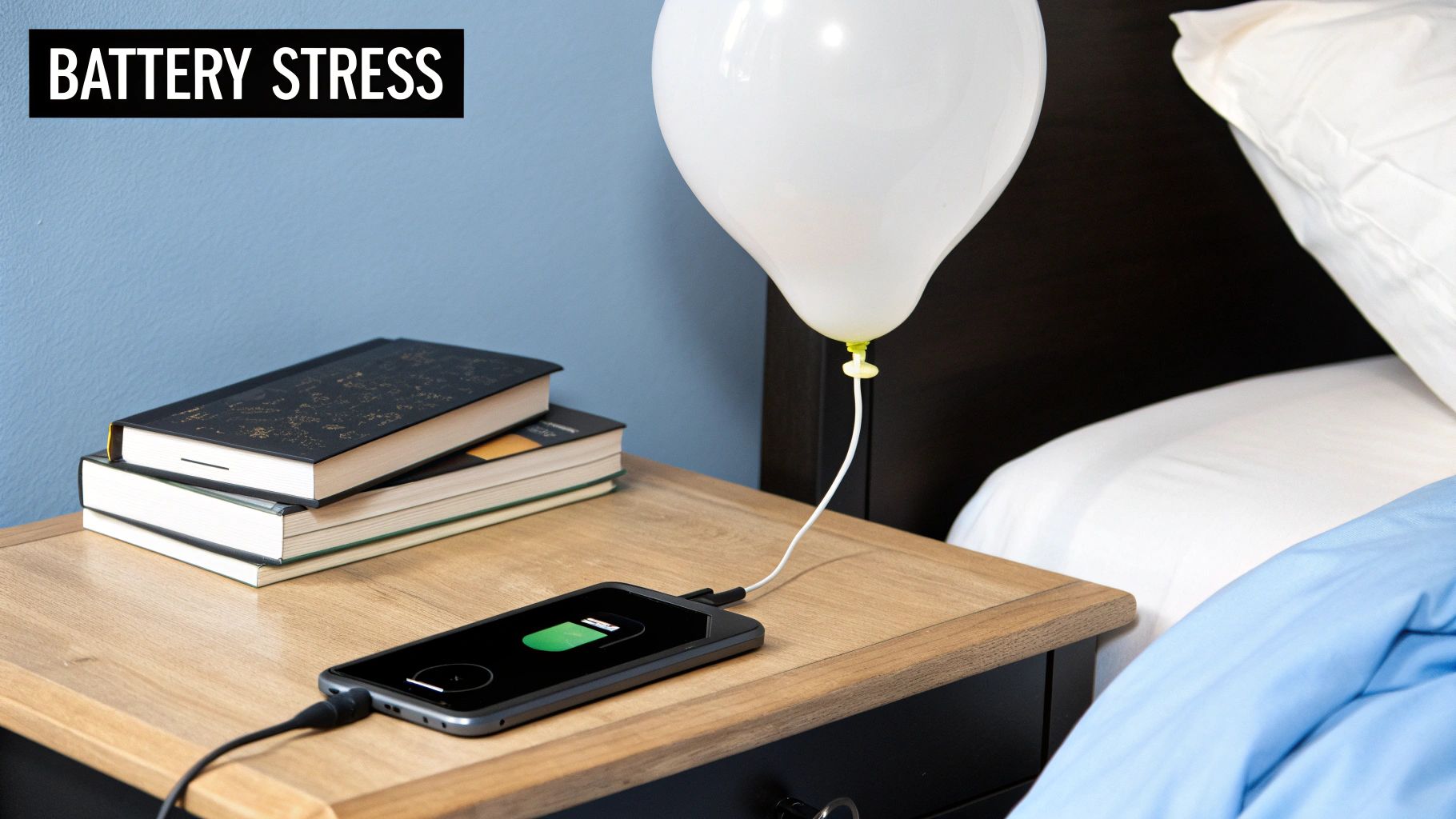
Unlike the tough lead-acid batteries in our cars, the delicate parts inside a phone battery hate being held at a full 100% charge. When a battery is completely full, its internal parts are under maximum stress, kind of like a rubber band stretched to its limit. Leaving it in that high-tension state for hours on end is what makes it age quickly.
A traditional trickle charger forces the battery to stay in this stressful state. This constant electrical pressure causes two main problems for battery health:
-
Extra Heat: Even a tiny bit of power creates heat. Over hours and days, this low-level warmth builds up, slowly cooking the battery from the inside and causing its sensitive materials to break down.
-
Internal Damage: When you keep pushing power into a full battery, unwanted materials can start to build up on its internal parts. This permanently reduces your battery's ability to hold a charge and, in rare cases, can even cause it to fail.
The result is easy to predict. A battery that's constantly trickle-charged will lose its ability to hold a charge much faster. You'll see its maximum capacity drop and watch your phone's battery life shrink before your eyes.
An old-school trickle charger is like that one friend who doesn’t know when to leave the party. Its constant presence puts unnecessary stress on the battery, preventing it from resting and leading to it wearing out early. Smart charging, on the other hand, knows exactly when to back off.
Dumb Chargers vs. Smart Systems
The good news is that your smartphone, laptop, and other modern gadgets don't use this old method. They all come with a smart Battery Management System (BMS). This little internal "brain" manages the charging process, slowing down the power as it gets close to full and cutting it off completely once it hits 100%.
The charger only turns back on when the battery’s level naturally drops by a percent or two. This cycling prevents the non-stop stress that a "dumb" charger would create.
But here's where the problem comes back: overnight charging. Even with a smart system, your phone will repeatedly dip to 99% and then charge right back to 100%, over and over, all night long. These constant little top-ups while the battery is full still contribute to faster aging.
And that's the key difference. Old-school trickle chargers are a continuous, brute-force solution. Modern smart charging is a protective system, but even it can be improved to avoid the damage caused by keeping the battery at a high power level for too long.
Smarter Ways to Keep Your Batteries Healthy
Old-school trickle charging had its purpose, but for the modern batteries in our expensive gadgets, it's like using a sledgehammer for a job that needs a small screwdriver. As battery technology has improved, so have the ways we charge them. Today, we have smart solutions that work with your battery, not against it, to help it last much longer.
These smarter approaches get rid of the "always-on" method. Instead, they act more like a careful guardian, checking on the battery and giving it power only when it's truly needed. This change is a huge deal for keeping the devices we rely on every day healthy.
Meet the Modern Alternatives
The biggest step forward came when we moved from "dumb" chargers to "smart" ones. These modern alternatives are built to do one thing: charge a battery to full and then stop, preventing the slow, silent damage caused by overcharging.
Two main technologies lead the way here:
-
Float Charging: Think of this as the intelligent big brother to trickle charging. A float charger brings a battery to 100%, then shuts off completely. It only turns back on to give a small burst of energy when the battery’s power naturally dips to a certain level, keeping it topped off without the constant stress.
-
Smart Battery Maintainers: These are the best choice for long-term storage, especially for things like cars, boats, or RVs. A maintainer is basically a float charger with extra smarts. It uses a multi-step process to check, charge, and maintain a battery, making sure it stays in great shape for months without any risk.
A smart battery maintainer works like a thermostat for your battery. It doesn't run constantly; it checks the 'temperature' (charge level) and only turns on to keep it at the perfect state, keeping it healthy and reliable.
Taking Control of Your Phone's Charging Habits
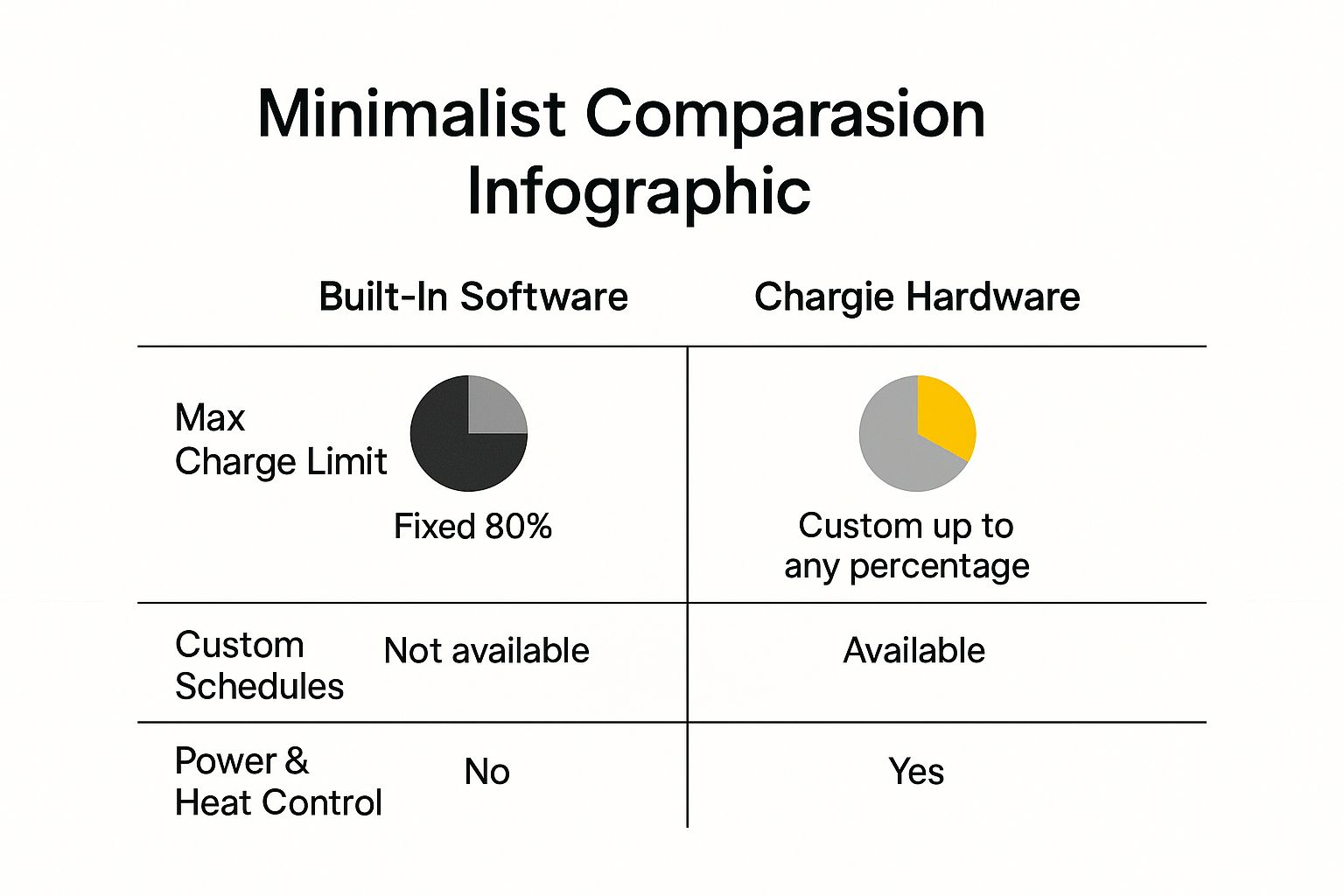
For the devices we use daily, like our phones, the problem isn't long-term storage—it's the nightly habit of plugging them in. Even the "smart" charging systems built into our phones can't stop the battery from sitting at a stressful 100% all night. This is where special software and hardware tools come in, giving you exact control over your device's charging.
Making sure your battery charges correctly is the first step, of course. If you run into issues, this guide on how to troubleshoot common iPhone charging problems is a great resource. But beyond just getting a charge, managing how much it charges is key. Modern tools let you set a maximum charge limit, often to the recommended 80%, which is a much healthier state for a phone battery to rest in.
This quick infographic helps show when a trickle charge approach makes sense.
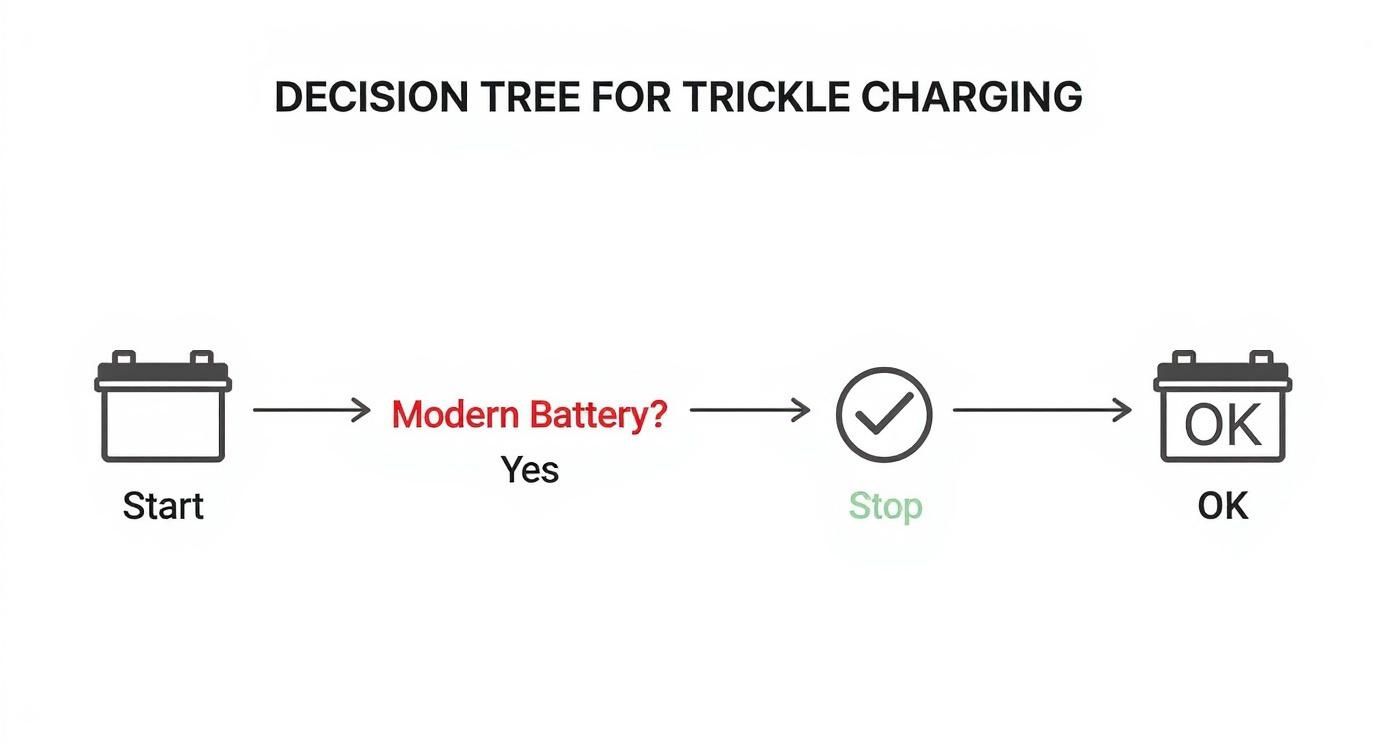
As you can see, continuous trickle charging just isn't the right tool for modern phone batteries, even though it works perfectly fine for older types like those in a stored car.
To better understand these differences, let's compare traditional trickle charging with more modern, smart solutions.
Comparing Charging Methods for Battery Longevity
| Charging Method | How It Works | Best For | Potential Risk |
|---|---|---|---|
| Traditional Trickle Charging | Provides a continuous, low-level flow of power to match the battery's natural drain. | Older battery types (like lead-acid in vehicles) for long-term storage. | Overcharging and damaging modern phone batteries by keeping them at a constant 100%. |
| Smart/Float Charging | Charges to 100%, then turns off. Only resumes charging when the power level drops. | Any battery type that needs to be kept full without constant stress. | Better than trickle charging, but still keeps the battery at or near a high state of charge. |
| Managed/Scheduled Charging | Uses hardware/software to set specific charging limits (e.g., 80%) and schedules. | Daily-use electronics like smartphones and laptops to reduce time spent at 100%. | Needs an external device or app to manage; not built-in to most standard chargers. |
The takeaway is clear: while older methods have their place, actively managing your charge is the best strategy for the devices you use every day.
Some systems even let you schedule the entire process. You can keep your phone at a healthy 50-70% for most of the night, then have it automatically top up just before your alarm goes off. This approach gives you a full day's charge while dramatically cutting down the time your battery spends in that high-stress, fully charged state. By taking control, you can significantly slow down battery aging and keep your device performing like new for much longer. It’s a simple way to protect your investment and reduce e-waste.
Common Questions About Trickle Charging
Okay, so we've covered the basics, but let's get down to real-world questions. How does trickle charging actually affect the devices you use every day? Is it safe to leave something plugged in forever? And how does it compare to just jamming power in with a fast charger?
This is where the important details lie. Think of this as your quick-reference guide to those common questions, with answers you can actually use. Let's clear up the confusion for good.
Is It Safe to Leave a Trickle Charger on All the Time?
This is the big one, and the answer comes down to one word: intelligence. It all depends on whether your charger is "smart" or "dumb."
A modern smart charger, or what's more accurately called a battery maintainer, is absolutely designed to be left connected for a long time. It’s not just blindly pushing power. It watches the battery’s power level, shutting off completely when it's full. If the battery's charge naturally dips, it gives it a small top-up and then goes back to standby. No overcharging, no drama.
An old-school "dumb" trickle charger, on the other hand, only does one thing. It pushes a steady, low-level flow of power into the battery, whether it needs it or not. Leaving one of these hooked up for too long is a recipe for disaster, as it will overheat and damage the battery.
For a vehicle you're storing, a smart battery maintainer is the only safe option for a long-term connection. For your smartphone, it's a different story. Even with smart charging, keeping it stuck at 100% creates unnecessary stress. It’s best to avoid leaving it plugged in all the time.
How Do I Know If My Device Needs a Trickle Charger?
You probably don't, at least not for your everyday gadgets. You really only need a separate trickle charger (again, a smart maintainer) for batteries in vehicles or equipment that will sit unused for a long time.
We're talking about things like:
- Motorcycles, boats, and classic cars that get stored over the winter.
- RVs and lawn tractors that are not used during the off-season.
- Backup generators that have to be ready to go at a moment's notice.
These devices use a maintainer to fight the natural power drain that happens in their batteries over weeks or months. Your smartphone, laptop, or tablet? They have their own smart battery management systems built right in. They don’t need any outside help.
The one odd exception is charging tiny gadgets with a power bank. Many power banks have a special "trickle charge mode" because low-power devices like wireless earbuds or fitness trackers don't draw enough energy to keep the power bank from turning off. This mode just keeps the power flowing so they can finish charging.
What Is the Difference Between Trickle Charging and Fast Charging?
They’re polar opposites, like the tortoise and the hare. They're built for completely different jobs. You can think of it as the difference between a slow IV drip and a shot of adrenaline.
Trickle Charging:
- Goal: Maintenance. Its whole purpose is to drip-feed a tiny amount of power to keep a full battery from draining.
- Speed: Very slow. The power is just enough to stop the battery from losing its charge.
- Use Case: Keeping a battery healthy during long-term storage.
Fast Charging:
- Goal: Speed. It's designed to push as much power as safely possible into a battery, as quickly as possible.
- Speed: Extremely fast. It delivers a lot of power, especially when the battery is between 0-80%.
- Use Case: Getting a quick power boost when you're in a hurry.
While fast charging feels like magic, that high power creates more heat and puts more stress on the battery’s insides. Using it too often will make your battery age much faster than slower, gentler charging methods.
Can Trickle Charging Bring a Dead Battery Back to Life?
Nope. In almost every situation, that's a hard no. A trickle charger is meant for keeping a battery healthy, not for reviving it. Its low-power flow is nowhere near strong enough to bring back a battery that's truly dead—meaning its power level has dropped below a safe point.
A completely dead battery usually means there's some kind of internal damage. Trying to use a trickle charger on it is pointless and can sometimes even be unsafe.
To even attempt a rescue on a deeply drained battery, you'd need a special, powerful charger with a "reconditioning" mode. These tools use specific power pulses to try and fix the damage, but even they don't always work. More often than not, a dead battery is just that: dead. It needs to be replaced.
The best way to protect your battery isn't just about avoiding the wrong type of charging—it's about actively using the right kind. For the devices you rely on daily, that means taking control of the charging process to prevent the stress of sitting at 100%. With the Chargie device, you can set custom charging limits, schedule overnight top-ups, and dramatically extend the lifespan of your phone and laptop batteries. Protect your investment and stop premature battery aging by visiting https://chargie.org to learn more.